
Last updated 08/12/2026
Data Centers in Cheyenne: Facts, Impacts & Public Information
At Cheyenne LEADS, our mission is to position Cheyenne and Laramie County as a location of choice for new and expanding businesses. As we obtain additional information we will update the page to be the source of accurate information pertaining to Data Centers in Cheyenne and Laramie County. We are constantly working with the companies themselves, the city and county to maintain the accuracy of the information on this page.
This page aims to compile the information from various local sources to provide transparency and available information surrounding local data centers. This page is not intended to persuade residents to support or oppose data centers. It is intended to provide a single place where residents can find information, source documents, local impact data, and answers to common questions. Where information is unknown, incomplete, estimated, or dependent on future approvals, we will say so clearly.
Disclaimer
Cheyenne LEADS is committed to making factual information available as clearly and promptly as possible. Because some data may change, be incomplete, or still be unavailable, this page includes source links, release dates, and update dates wherever possible.
How Cheyenne LEADS defines “a data center”
A data center is a physical, centralized facility used to house, store, and manage critical IT infrastructure, including computer servers, data storage drives, and networking equipment.
Data centers are identified by location rather than building count, power use, or water consumption because a single data center campus may include one large building or several smaller buildings. Location-based identification is the only consistent way to accurately answer how many data centers exist.
Current Number of Data Center Locations in Cheyenne/Laramie County
As of 08/04/2026

Data Centers: What They Are & What They Do
Data centers are buildings that house computer servers, data storage systems, networking equipment, power systems, cooling systems, backup equipment, and security infrastructure. They support everyday digital services such as email, video streaming, cloud storage, online banking, healthcare data, business software, cybersecurity, artificial intelligence tools, and data backup.
In simple terms, whenever someone sends an email, saves a photo to the cloud, streams a movie, asks an AI chatbot a question, or uses a business software platform, that information is processed and/or stored in a data center somewhere.
National Context
The United States has thousands of data centers, and estimates vary by source and counting method. Pew Research Center reported that the U.S. had more than 3,000 operational data centers and more than 1,500 data centers in various stages of development as of February 2026, based on its analysis of Data Center Map data. A separate Pew analysis using October 2025 data said the U.S. had more than 4,000 data centers, including both operational sites and projects under development.
Data centers are handled different in every state. The State of Wyoming has created guard rails that protect the communities these data centers will be located near.
Local Context: Why Data Centers are Choosing Cheyenne
Data centers choose Cheyenne for its unique combination of cool climate, abundant energy, favorable tax laws, geologic and geographic stability.
Ideal Climate: Cheyenne’s high-elevation, cool climate allows facilities to use outside air for cooling most of the year. This slashes energy and water consumption and lowers operating costs.
Energy Access & Cost: As a major energy producer, Wyoming offers abundant electricity, and has established tariffs that ensure large power users pay for their own infrastructure, protecting local ratepayers.
Fiber Connectivity: Cheyenne sits on a major transcontinental fiber optic “internet superhighway,” ensuring excellent latency and redundant connectivity.
Low Natural Disaster Risk: The region faces a negligible risk of earthquakes, tornadoes, hurricanes, or floods, making it highly secure for mission-critical operations

Meta
Cheyenne Data Center Announcement 2024
Microsoft
Cheyenne Data Center Expansion Announcement 2026Local Data Center Impacts

Power
Thanks to Black Hills Energy’s Large Power Contract Service Tariff, any and all data centers that fall into the Black Hills Energy service area pay for 100% of costs. This agreement mitigates the risk of price increases by deferring all costs to the incoming data centers.
- Data centers pay for all power infrastructure and needed improvements.
- Data centers help utilities maintain consistent revenue streams & improve grid reliability and efficiency
- Wyoming produces far more energy than it consumes.
Additionally, the Trump Administration has pushed forward the Ratepayer Protection Pledge that protects citizens from increased power rates due to data centers.
Resources:
- 2025 Wyoming Statutes – Title 37 – Public Utilities
- Black Hills Corp. Executes Definitive Agreements to Serve Google’s Planned Data Center in Cheyenne, Wyoming
- Black Hill Energy – Tariff
- Cowboy State Daily: Coal Plants Across Nation Get Second Life Due to Data Center Growth – May 2026
- How Microsoft and a Wyoming utility designed a data center tariff that works for everyone – Dec 2016
- Natural gas powers the data center boom – May 2026
- State of WY Legislature – Special Electric Utility Agreements – February 2019
- Supporting the White House Ratepayer Protection Pledge: Google’s approach for responsible energy growth – May 2026
- Tallgrass and Mitsubishi Power Americas Announce Turbine Allocation for Cheyenne Power Hub – May 2026
- Wyoming Approves Data Center Campus that Includes 2.7 GW of New Natural Gas-Fired Generation – January 2026

Water
Modern data centers in Wyoming are designed for air-cooled or closed-loop systems that dramatically reduce water consumption. In fact, data centers only use 2.2% of Cheyenne municipal water supply. Data centers pay for all infrastructure upgrades. Data centers continue to improve technology and prioritize environmental sustainability, leading to significantly lower water usage. Many companies are also working toward “water positive” goals, returning more water to the environment than their operations consume. The transition of the local refinery to biodiesel production resulted in a significant reduction in industrial water use. This change is often referenced as part of broader discussions about historical and future industrial water demand in the community.
Municipal Water
Data Centers in the city of Cheyenne are referred to use city water. This means that the amount of water they use is monitored, as is the sewer. Find real data from the Board of Public Utilities here.
Commercial Wells
Commercial wells in Laramie County are regulated by the Wyoming State Engineer’s Office, and any large water user, including data centers, must obtain water rights and permits before groundwater can be used. Proposed projects are reviewed to ensure they do not negatively impact existing users, aquifers, or long-term water supplies.
Closed loop system
A closed-loop cooling system recycles the same water over and over instead of constantly pulling new water from the community supply. This type of system greatly reduces overall water use because the water is cooled, reused, and kept within the facility rather than being discharged or wasted.
Glycol in cooling systems
Glycol is a coolant that is commonly used for freeze protection. Some closed-loop cooling systems use a water-glycol mixture to help prevent freezing in cold climates like Wyoming. Glycol is commonly used in building, HVAC, vehicle, heavy equipment, industrial, along with data center cooling systems as both freeze protection and a heat-transfer fluid. When needed it is disposed of by licensed recycling companies.
Resources:
- Understanding water use at Microsoft datacenters
- Meta: Volumetric Water Benefits – August 2025 (Prepared by Limno Tech)
- Microsoft will replenish more water than it consumes by 2030 – September 2020
- Microsoft Data Center Community Pledge – Responsible water usage
- Frog Creek Partners Launches Water Replenishment Initiative with Support from Microsoft – August 2025
- WyoFile: Amid growing concern, data center developers insist they won’t stress Wyoming Water – May 2026
Sewer/Discharge
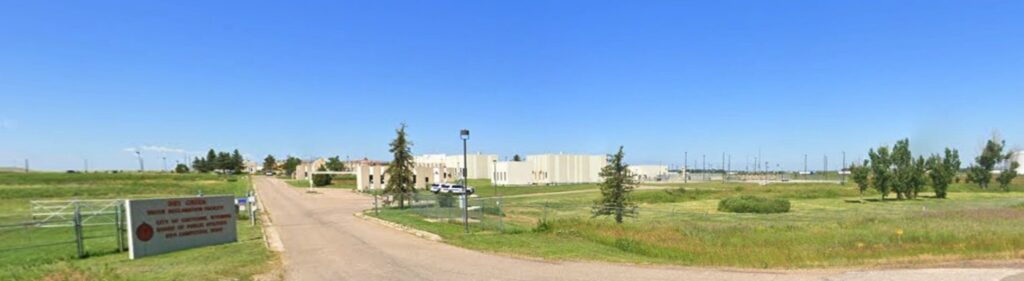
Many modern data centers use closed-loop cooling systems that recycle or recirculate water and can significantly reduce water discharge. When wastewater or industrial water is discharged, it must comply with applicable local, state, and federal permitting and environmental regulations. Wastewater entering the Board of Public Utilities (BOPU) sewer system is subject to monitoring and regulatory requirements.
Industrial Pretreatment Program/EPA Regulation
The Board of Public Utilities has a program that is required by and approved by the EPA. As a control authority, it is the responsibility of the Board of Public Utilities to prevent the discharge of pollutants into the sanitary sewer infrastructure (this includes sewer mains and the treatment facilities) that would result in the treatment facility’s inability to treat the wastewater or to prevent a contaminant from passing through our facility into the environment.
Resources:
- Cheyenne Board of Public Utilities (BOPU) – Protecting Cheyenne’s Sanitary Sewer Infrastructure
- Wyoming Department of Environmental Quality (DEQ) – Wastewater Permitting
Sound/Noise
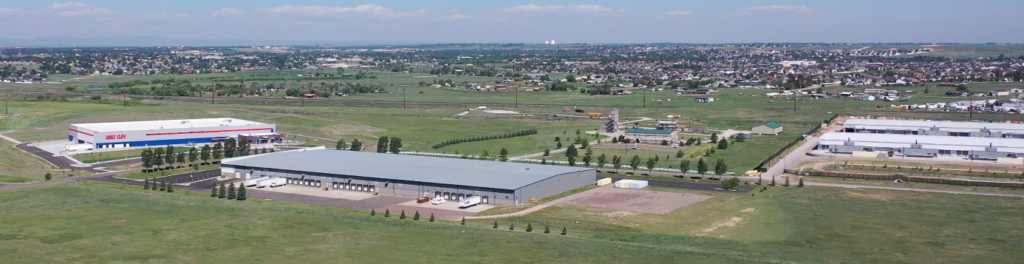
Modern data centers are designed with noise mitigation in mind and must comply with local noise regulations.
City Noise Ordinance
In Cheyenne, an ordinance addressing data center sound levels from August 2025 limits sound levels to 60 decibels during the day and 55 decibels at night at the property line (about the level of normal conversation or background office noise).
Low Frequency Noise
Research on low-frequency noise and infrasound is ongoing, as a result there isn’t enough sound evidence on the topic. What we do know is that data center companies continue to advance technology & research to reduce all noise associated with their centers.
Lighting
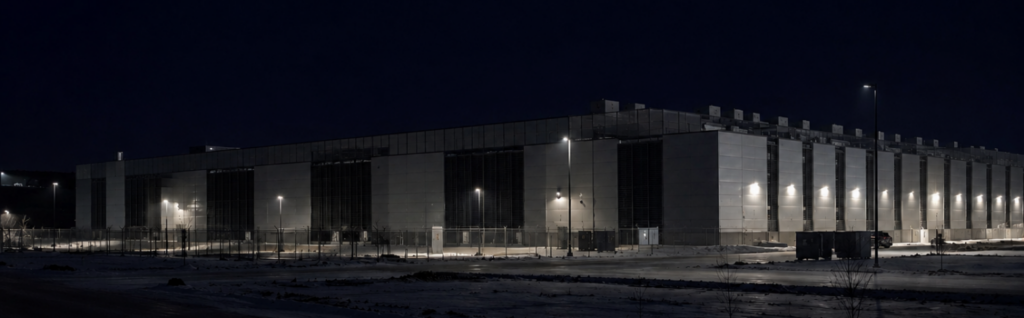
Data centers are designed to minimize light pollution and reduce impacts on surrounding properties and wildlife. Facilities use requested to use downward-facing LED lighting, motion sensors, shielding, and dark-sky compliant fixtures that direct light only where needed rather than allowing it to spill into nearby neighborhoods or the night sky.
During Construction
Lighting impacts are typically greater during construction as projects require temporary work lights, extended work hours, and illuminated equipment for safety reasons. Once a data center is completed, lighting is more controlled and limited primarily for security and operational needs.
Unreasonable Lighting
Residents who experience unreasonable construction lighting directed toward their property are encouraged to contact Daunte at Cheyenne LEADS for assistance.
Resources:
- City of Cheyenne External Lighting regulations (Pages 6-19)
- OSHA Temporary Lighting Requirements for Construction Sites – December 2025

Environmental/Air Quality
Even when located in a business or industrial park, data centers in Cheyenne and Laramie County must comply with local, state, and federal environmental regulations. This includes obtaining permits through the Wyoming Department of Environmental Quality (DEQ) for backup generators, fuel storage, air emissions, stormwater management, and other operational systems.
Facilities are required to meet strict air quality standards, complete environmental reviews, and participate in ongoing monitoring and inspections to ensure compliance.
Public notice and comment periods are often part of the permitting process, providing transparency and opportunities for community input before permits are approved.
Land and Wildlife
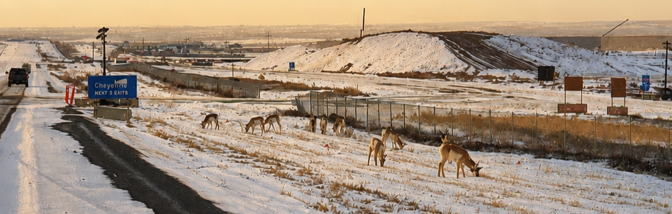
Data centers evaluate and address potential impacts to wildlife, habitat, drainage, and land use before development moves forward.
Environmental reviews often include studies related to protected species, migratory birds, wetlands, stormwater runoff, and overall site impacts to ensure projects comply with local, state, and federal regulations.
Companies work to minimize land disturbance by preserving natural buffers, using landscaping and berms, controlling lighting, and designing sites to reduce impacts on nearby wildlife and habitat.
Once operational, data centers generally have low traffic, low emissions, and limited outdoor activity compared to many other industrial uses, helping reduce long-term impacts on surrounding land and species.

Workforce
During Construction
- Data center projects create well-paying skilled trades jobs, including opportunities for certified electricians, contractors, and construction professionals.
- These are long-term construction projects, not short-term jobs — Microsoft alone has had ongoing construction activity in Cheyenne for more than 14 years.
- Companies prioritize hiring local workers and contractors whenever possible before bringing in specialized firms from outside the area.
- Workers coming into the community support the local economy by staying in hotels, eating at restaurants, shopping locally, and spending money throughout Cheyenne and Laramie County.
During construction, workforce opportunities include electricians, operators, trades, contractors, infrastructure crews.
Permanent
- Data centers create permanent jobs in operations, IT, security, facilities management, networking, and maintenance.
- These long-term positions provide stable careers, benefits, and training opportunities for local workers.
- Data centers also support ongoing jobs for local contractors, suppliers, restaurants, hotels, and other businesses in the community.
Long-term operational workforce opportunities include technicians, networking, facilities, cooling systems, security, logistics, critical environment technicians.
Educational/Upskilling Opportunities
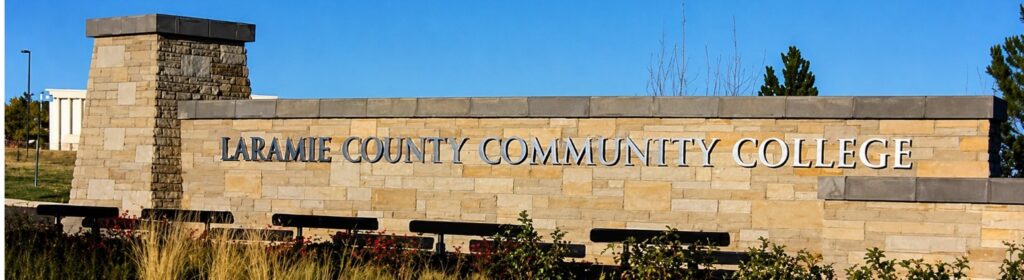
Data centers have created opportunities for partnerships with Wyoming Workforce Services, Laramie County Community College, and local K-12 schools to help train and prepare the future workforce.
Programs at LCCC
Microsoft partnered with Laramie County Community College to create the Datacenter Specialist Program, helping train students for careers in server operations, networking, cybersecurity, and IT support.
Meta’s American Workforce Academy
America’s Workforce Academy (AWA) is a nationwide, unprecedented fast-track to a long-term career in a skilled trade. It’s a program that supports all participants while they learn and then guarantees a job for all graduates.
Microsoft TechSpark
Microsoft has invested millions of dollars in workforce development, education, and nonprofit partnerships in Cheyenne through programs like Microsoft TechSpark, supporting organizations focused on training, technology education, and career readiness.
Wyoming Department of Workforce Services
Data center project provide opportunities for Wyoming Department of Workforce Services to expand apprenticeship, skilled trades, and technical workforce training programs tied to construction and long-term operations careers.
K-12 Partnerships
Microsoft and Meta have both publicly supported education and workforce-development initiatives in communities where they operate data centers.
LCSD1 Trades Academy
Laramie County School District #1’s Trades Academy was created to help students explore skilled-trades careers and connect directly with workforce opportunities after graduation. In 2026, LCSD1 announced a partnership with the Meta Cheyenne Data Center to support the program and strengthen local workforce pathways. Through the Trades Academy, students can participate in internships, pre-apprenticeships, job shadowing, dual-credit opportunities, and other hands-on learning experiences with industry partners. The program is designed to help students gain real-world experience while building connections to careers in construction, technology, infrastructure, manufacturing, and other skilled trades.
Meta STEM/STEAM Education Support
Meta has committed funding for STEM and STEAM education programs through its Data Center Community Action Grants program, which provides direct funding to schools, nonprofits, and community organizations in areas where Meta operates data centers. Eligible projects include initiatives that improve science, technology, engineering, arts, and mathematics (STEAM) education and help connect students to future technology-focused opportunities. Meta expanded the program to include Cheyenne in 2026.
Resources:
- LCCC Pathway: Information Technology
- LCSD1, Industry and Meta team up to build workforce pipeline through Trades Academy | YouTube – November 2025
- Microsoft Data Center Academy in Cheyenne
- Microsoft announces intent to expand datacenter operations in Cheyenne, accelerating innovation and economic growth – April 2026
- Building a local high-tech workforce with Laramie County Community College
- LCCC’s IT Program is landing students jobs right now – February 2026
Non-disclosure agreements (NDAs)
NDAs are common in economic development projects and are often necessary to protect confidential business information during site selection and negotiations. Cheyenne LEADS commonly signs NDA’s.
Companies may require NDAs to protect proprietary information, competitive strategies, infrastructure plans, financial data, or potential expansion details before a project is publicly announced.
Economic development officials often sign NDAs so communities can be considered for projects and receive access to the information needed to evaluate infrastructure, land use, utilities, and economic impacts.
Without confidentiality agreements, many companies would simply choose not to consider a community during the competitive site selection process.
Even when NDAs are in place, projects must still comply with public permitting, zoning, environmental review, and public hearing processes before development can move forward.
Development Review Processes
Regardless of whether a company has publicly announced its plans, or is located within an industrial park or business park, approval of a project requires compliance with the applicable development review processes held at the federal, state, county, and municipal level.
Wyoming Department of Environmental Quality (Wyoming DEQ)
The Wyoming Department of Environmental Quality administers a projects compliance with the Industrial Siting review process, as well as water and air quality standards.
Industrial Sitings Process
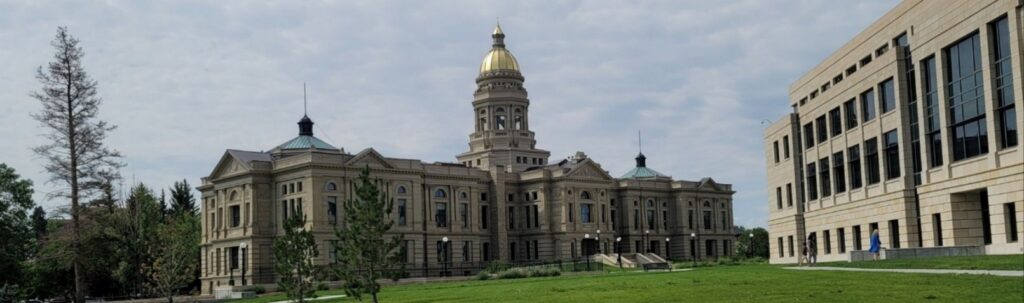
Wyoming’s Industrial Siting Act reviews certain large-scale industrial developments for potential social, economic, and environmental impacts. However, under Wyoming’s Industrial Siting framework, some non-mineral processing facilities — including data centers — may be exempt from Industrial Siting review when located within an existing industrial or business park. As a result, project review may occur primarily through local planning, zoning, permitting, and development processes rather than through the state Industrial Siting Council.
Projects must still comply with environmental regulations, utility requirements, local land use approvals, and state permitting processes regardless of location. Being in an existing business park may help because the land is already zoned and planned for industrial development, but it does not eliminate state regulatory oversight.
According to Wyoming DEQ, being located within an industrial or business park does not eliminate other permitting, utility, environmental, infrastructure, or local government review requirements.
City of Cheyenne Process
The City of Cheyenne’s development review process requires data center projects to comply with the requirements for zoning, water and sewer utilities, stormwater, traffic, fire protection, and building permits before construction can begin.
Depending on the location, size and scope of the project, developers may also be required to obtain approvals through different public hearings at the City’s Planning Commission, Public Services Committee, and the City Council. Project’s requiring a public hearing may include those seeking to annex property into the City of Cheyenne, amendments to the City’s future land use map, rezoning, and plat approval.
Resources:
- City of Cheyenne Data Center Map
- City of Cheyenne Planning & Development Department
- City of Cheyenne Development Applications
- Planning Commission page (agendas, minutes, videos)
- City of Cheyenne Engineering/BOPU plan review process
- City of Cheyenne Unified Development Code (UDC)
- Connect Cheyenne Development Projects

Laramie County Process
Similar to the City of Cheyenne’s development review process, Laramie County requires data center projects to comply with the requirements for zoning, water and sewer utilities, stormwater, traffic, fire protection, and building permits before construction can begin.
Depending on the location, size and scope of the project, developers may also be required to obtain approvals through a public hearing with the Laramie County Commissioners
Resources:
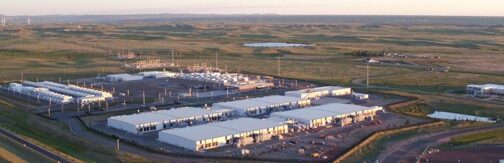
Why Data Centers Matter to U.S. Security & Military
Data centers are critical to U.S. national security because they support military communications, intelligence gathering, and real-time decision-making. They provide the computing power needed for cybersecurity, artificial intelligence, and the protection of critical infrastructure such as energy, transportation, and financial systems. As technology becomes increasingly important to defense and economic strength, data centers help maintain America’s military readiness and global competitiveness.
Surveillance and AI Technology
Is China really a threat with the US outnumbering all other countries for current data centers?
Quantity isn’t the same as capacity. The goal is to ensure America has the computing capacity, cybersecurity, and AI infrastructure needed to remain economically competitive and secure in the decades ahead.
Are data centers really “surveillance centers”?
It’s reasonable to ask questions about privacy and data security. However, a data center is infrastructure, similar to a power plant or telecommunications facility. The privacy issue is determined by how data is collected and used, not by the existence of the data center itself. AI can certainly be used for surveillance, just as it can be used for medical research, fraud detection, weather forecasting, and national defense. The concern is not the data center itself, but how AI technologies are developed, regulated, and deployed.
The goal is to ensure America has the computing capacity, cybersecurity, and AI infrastructure needed to remain economically competitive and secure in the decades ahead.
Resources:
- Agitators united by Chinese money, hate for America target data centers, experts warn – May 2026
- Republicans probe China’s influence in data center opposition – June 2026
Annexation
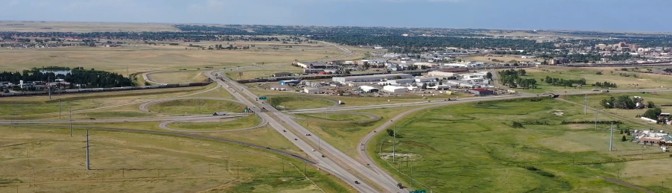
Annexation is the process of bringing land outside city limits into the city so it can receive city services and be governed by city regulations. Cities generally want to annex data centers because they bring substantial economic benefits while requiring relatively few municipal services compared to other types of development.
Why Companies want to be in the city – Many companies choose to annex into the City of Cheyenne because it provides access to reliable city utilities, including water and sewer.
Why the City wants Data Centers – Annexation is beneficial since it allows the city to manage growth ensuring projects contribute to the tax base and help support public infrastructure and services. It also gives the city greater oversight through zoning, permitting, utility agreements, and development requirements.

Community Benefits from Data Center Contributions
Property Taxes Paid by Data Centers in Cheyenne (2012-2015)
Data centers generate significant property tax revenue that supports schools, LCCC, the City of Cheyenne, conservation districts, public safety, and other essential community services. In addition to property taxes, data centers contribute through business personal property taxes and utility-related taxes.
The figures below represent property taxes only. As additional data centers are developed and come online, these contributions will continue to grow, strengthening the tax base and increasing funding for local services throughout Cheyenne and Laramie County.
Property Taxes Paid by Data Centers
Property Taxes from Lunavi, Meta, Microsoft and Related Digital.
| Taxing Entity | Amount |
| Laramie County School District #1 | $4,007,572.98 |
| Laramie County Community College | $915,760.98 |
| Laramie County – General | $1,527,682.11 |
| Laramie County Library | $308,697.94 |
| Weed & Pest | $113,079.41 |
| Conservation District | $77,102.78 |
| Laramie County School Fund | $1,082,347.32 |
| City of Cheyenne | $325,297.09 |
| Laramie County Fire Authority | $208,484.02 |
| Wyoming State School Fund | $1,799,841.16 |
| GRAND TOTAL | $10,365,565.79 |
Additional Sales & Use Tax
| Taxing Entity | Amount |
| Sales tax on Power (2018-2024) | ~$27,000,000 (estimated) |
| Permitting & Development Fees | $36,643,442.00 |
| Tangible Personal Property Tax | $48,110,203.00 |
| GRAND TOTAL | $111,753,645.00 |

Wyoming Data Center Incentives
The City of Cheyenne and Laramie County do not currently offer a dedicated local data center incentive program. Most publicly discussed data center incentives in Wyoming are state-level programs.
Wyoming offers sales and use tax exemptions for qualifying data center equipment and software purchases. Qualification requirements vary depending on the exemption category and investment level. Some exemptions require at least $5 million in capital infrastructure investment and more than $2 million in qualifying equipment and software purchases, while additional exemptions may apply when infrastructure investments exceed $50 million.
Wyoming also offers the Managed Data Center Cost Reduction Grant through the Business Ready Communities (BRC) program. This program may reimburse portions of qualifying electrical and broadband costs over a three-year period, subject to program requirements, investment commitments, payroll thresholds, and matching requirements.
Resources:
- Wyoming Legislature / Wyoming Business Council Data Center Sales Tax Exemption
- Wyoming Business Council – Managed Data Center Cost Reduction Grant
- Wyoming Business Council – Managed Data Center Cost Reduction Funding

Philanthropic
Microsoft has invested millions of dollars in Cheyenne-area nonprofits, workforce development, education, and community programs through initiatives like Microsoft TechSpark. Since 2018, Microsoft has supported 56 community projects and donated approximately $4.7 million to local organizations.
Microsoft has partnered with organizations including Laramie County Community College, Rooted in Cheyenne, the Boys & Girls Club of Cheyenne, and the Wyoming Community Foundation to support workforce training, technology education, and community services.
Meta’s Data Center Community Action Grants program is an annual initiative that provides direct funding to schools, registered nonprofits, and community organizations in locations where Meta has a data center. The grants support projects that address critical community needs by putting technology to use for community benefit, enabling people to build strong and sustainable communities, and improving local STEAM education.
Data center companies also contribute millions annually in property taxes that support local schools, parks, libraries, hospitals, and other public services in Cheyenne and Laramie County.
Business Parks and Zoning
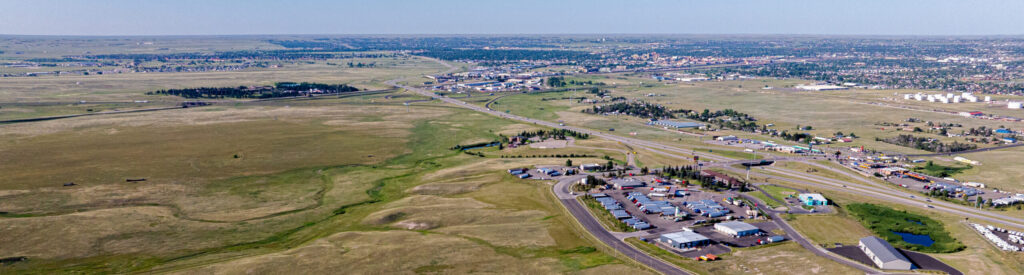
Business Parks, Zoning & Development Standards
Business Parks & CC&Rs
CC&Rs (Covenants, Conditions, and Restrictions) help guide how property in a business park is developed and maintained.
- They can regulate landscaping, lighting, signage, building design, drainage, noise, and maintenance standards.
- CC&Rs help create consistency, protect property values, and maintain an attractive, high-quality business environment.
- They also provide an additional layer of oversight beyond city zoning requirements.
Business Park Zone
The City of Cheyenne’s Business Park (BP) zoning district was created to support long-term economic development and provide consistent standards for business and employment centers. The BP zone was not created specifically for data centers and allows a variety of uses, including offices, technology facilities, medical services, hospitality, retail, and light industrial development. Projects within the BP zone must comply with applicable zoning regulations, development standards, utility requirements, and, where applicable, business park CC&Rs.
Development standards are intended to address issues such as setbacks, landscaping, lighting, access, infrastructure, and overall site compatibility. Requirements vary by project and location, and proposed developments may also be subject to additional review by property owners’ associations, developers, utility providers, or local governments.
Resources:
Data Centers in Cheyenne
Click on the logos below to explore information on data centers in Cheyenne.





Additional Resources:
- A Tale Of Two Towns: Cheyenne Pushes Back On Data Centers, Evanston Not So Much
- Cheyenne Data Center Panel | YouTube – June 2026
- CleanSpark Executes 75 MW of Power Contracts and Completes Acquisition of Bitcoin Mining Site in Wyoming – August 2024
- The Data-Center Panic Is Overblown | The Atlantic – June 2026
- Foreign Influence in the Campaign against American AI – May 2026
- Foreign-Funded Opposition to U.S. Data Center Expansion – April 2026
- Lunavi’s Cheyenne Data Center Info Sheet
- Meta’s Cheyenne Data Center
- Microsoft Data Centers in Wyoming
- Microsoft Data Center Economic Impacts 2026
- Microsoft 2026 Environmental Sustainability Report
- Microsoft to Triple its Cheyenne Data Center Footprint with 3,200-Acre Land Buy – April 2026
- NCAR-Wyoming Supercomputing Center enters new phase
- Business Insider: We took a look inside a data center in Wyoming | Youtube Shorts
- Related Digital breaks ground on 302 MW data center campus in Cheyenne, Wyoming – October 2025
- WEDA: Mythbusting Data Centers: the Economic and Environmental Impacts of Tech in Wyoming Communities – May 2026
- Wyoming Comprehensive Economic Development Strategy